Mostrando entradas con la etiqueta Libros. Mostrar todas las entradas

viernes, 18 de junio de 2021

That's all, students!


Despite the extra level of stress and difficulty, we manage to complete another academic year. Congratulations to all for your marks and your good behaviour! You really deserve your summer holidays!


As usual, this last post also include some recommendations. Needless to say, this year's reading suggestions are about other historical pandemias...


The ghost map: the story of London's most terrific epidemic (cholera), by Steven Johnson. 

The pale rider: the Spanish flu of 1918 and how it changed the world, by Laura Spinney.

A planet of viruses, by Carl Zimmer.

Pandemias, by Tomek Żarneck


Of course, do not forget you may find other titles (both books and films) from previous years in the tab: Recommendations.


Enjoy the summer! Have fun... but take care! 


lunes, 15 de junio de 2020

Books against racism


Here you have 7 books recommended by The New York Times to learn and fight racism:


“White Fragility: Why It's So Hard for White People to Talk About Racism” by Robin DiAngelo

“How to Be an Antiracist” by Ibram X. Kendi

“Between the World and me” by Ta-Nehisi Coates (a letter to his 15-year-old son)

“They Can’t Kill Us All: A New Era In America’s Racial Justice Movement”, by Wesley Lowery (Lowery was a journalist of The Washington Post who witnessed the racial riots during Obama’s mandate, so it is a totally up-to-date reading).

“Freedom is a constant struggle” by Angela Davis

“Why I’m No Longer Talking to White People About Race” by Reni Eddo-Lodge

“So You Want to Talk About Race” by Ijeoma Oluo


jueves, 16 de enero de 2020

4º British: Spain in the 19th century. Travellers and magazines


In the following link from Instituto Cervantes, you can learn about the vision and impressions that many foreign travellers got though their holidays in Spain. Those authors were mainly from the UK, US, Ireland, Canada and Australia and wrote their works between 1750 and 1950. Maybe it can help you for illustrating your twitter activity... They talked about art, popular culture, costumes, stereotypes, territories, etc. 


Besides, you can also visit the archives website from "El Museo Universal" or "La ilustración española y americana", Spanish magazines published between the second half of the 19th and very first years of 20th centuries, that were sold as "Journal of science, art, literature, industry and useful knowledge" and were full of illustrations depicting various aspects of everyday life in Spain and Latin American countries.


viernes, 7 de junio de 2019

Funny books for learning History

Another academic year is almost finished. Here you have then, as usual, several recomendations for reading, learning and also having fun during your deserved summer holidays:

La Historia como nunca antes te la habían contado (AcademiaPlay)


Historia del Arte en cómic (Vol.1: el mundo clásico). Autor: Pedro Cifuentes (Editado por Desperta Ferro)


¡Es la guerra! Las mejores anécdotas de la Historia militar. Autor: Jesús Hernández 


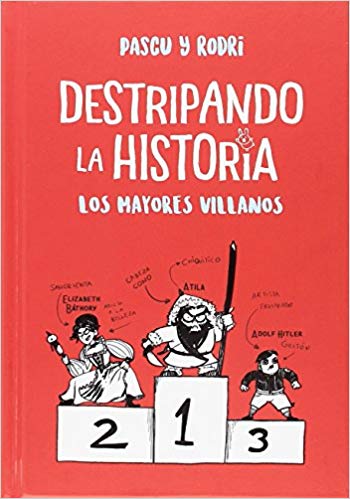
Destripando la Historia: los mayores villanos. Autores: Rodrigo Septién y Álvaro Pascual


Polvo eres (dos volúmenes) y Menudas historias de la Historia. Autora: Nieves Concostrina.


Astérix: las citas latinas explicadas. Autor: Bernard-Pierre Molin


Un mapa en la cabeza: anécdotas, historias y curiosidades de la Geografía. Autor: Ken Jennings


Eso no estaba en mi libro de Historia (varios volúmenes: España, Roma...)

Historias de la Historia: las anécdotas y curiosidades más interesantes jamás contadas. Autor: Carlos Fisas.

Historia absurda de España. Autor: José David Morales


¡Feliz lectura! :) 


miércoles, 13 de febrero de 2019

Reto Lector 2019: En clave femenina


¿Ya os habéis apuntado al Reto Lector 2019: En clave femenina de nuestra biblioteca escolar? ¿Ya habéis escogido a vuestra autora de novela gráfica para esta primera prueba? Si aún no os habéis decidido, en el blog de La Biblio del Vasco podéis encontrar numerosas sugerencias:


¡Feliz lectura! :)

lunes, 4 de junio de 2018

4º British: Graphic novels for learning History


As usual, here you have a list of recommendations for your holidays. This year is about graphic novels!. It is only a selection but it includes a wide range of different historical moments and perspectives. Enjoy the reading!


Women

Persépolis, by Marjane Satrapi. Autobiography of a teenager in Teherán, during the difficult years of the Islamic Revolution.

Sally Heathcote, Suffragette, by Mary M. Talbot & Kate Charlesworth. As the growing hunger for change grows within a culture of rigid social mores and class barriers, Sally and thousands like her rise up to break the bonds of oppression at the risk of ostracization and violence. 

Leonor, the Black legend, by Delalande, Mogavino & Gómez. Biography of the brave and powerful Leonor of Aquitania (1122-1204), who brokes the medieval stereotypes fom women and changed History.


Red Rosa, by Kate Evans. A graphic biography of Rosa Luxemburg, a central figure in the early twentieth century socialist movement in Europe, shows how an independent, passionate woman stood fast for her beliefs. 


I World War

¡F***ing War!, by Jacques Tardi. A classic graphic novel about life in the trenches.

Gravrilo Princip, by Henrik Rehr. The story of the man that change the 20th century.

The Harlem Hellfighters, by Max Brooks & Caanan White. It is a fictionalized account of the experiences of the African-American 369th Infantry Regiment, nicknamed the "Hell-fighters" by German soldiers.


II World War


Berlin: City of Stones, by Jason Lutes. A good inter-war novel set in the later years of the Weimar Republic. It covers the lives of several people in Berlin in 1928-1929, with as a backdrop the rise of Nazism. 

Normandy, a graphic novel of the D-Day, by Wayne Vansant.

Maus, by Art Spiegelman. The story of a survivor from the concentration camps.

Los surcos del azar, by Paco Roca. The Story of “La Nueve”, the international Regiment, mainly formed by Spanish Republicans, that first enter in Paris,  on the 24th August 1944.


History of Spain

La balada del Norte, by Alfonso Zapico. The story of several characters Turing the difficult times of the II Republic and the rebellion in Asturias.

La guerra civil española, by José Pablo García & Paul Preston

El otro mar, by Alfonso Zapico. Biography of Vasco Núñez de Balboa, one of the explorers/conquerors of America, around the year 1500.

1212. Las Navas de Tolosa, by Jesús Cano de la Iglesia

Las Meninas, by Javier Olivares & Santiago García

Pablo Picasso, by Birmant & Oubrerie

El Cid, by Antonio Hernández Palacios


Post-War conflicts

CHE: a revolutionary life, by Jon Lee Anderson & José Hernández

Pyongyang, by Guy Deslise. The author had the opportunity of visiting North Korea. Altough controlled and chaperoned by his translator and a guide, among the statues and propaganda of Korean leaders (the world's only Communist dynasty), Delisle was able to observe more than was intended of the culture and lives of the few North Koreans he encountered. 

A Chinese Life, by Philippe Otie & Li Kunwu. The creation of the People’s Republic of China in 1949, the rise and reign of Chairman Mao Zedong, and his sweeping, often cataclysmic vision for the most populated country on the planet.

Waltz with Bashir: A Lebanon War, by Ari Folman.

Best enemies, by Jean-Pierre Filiu & David B. A story of USA & Middle East relationships (1783-1953)

Such a lovely little war: Saigon 1961-1963, by Marcelino Truong. This Franco-Vietnamese author recounts his childhood in Saigon (now Ho Chi Mihn City). It is a gentle introduction to the beginning of the Vietnam War seen by a child of a bi-cultural marriage.

The Photographer, by Emmanuel Guibert & Didier Lefèvre. It recounts the journey of a reporter through Afghanistan while accompanying Doctors Without Borders in a country torn apart by a war pitting Russians against an Afghan resistance supported by the US and other countries.

Safe Area Gorazde, by Joe Sacco. The author, a master of graphic reportage, managed to convey the nuances of politics combined with a deep understanding of what Bosnians were going through in The War in Eastern Bosnia 1992-95. Other main titles of Joe Sacco are Palestine and Footnotes in Gaza, both about the Palestinian-Israeli conflict and the Gaza strip.


Miscelánea

Democracy, by Alecos Papadatos, Abraham Kawa & Annii Donna. The story of how democracy started in Ancient Athens, from the perspective of one of its citizens.

Dubliner, by Alfonso Zapico. The tumultuous life of James Joyce, one of the most famous writers of the 20th century.

Jerusalem: Chronicles from the Holy City, by Guy Delisle. Travelogue about life in the Holy City that serves as a cultural roadmap of the city's complexities and relevance while offering insight into the human impact of conflicts on both sides of the wall.


viernes, 24 de marzo de 2017

Lectura Internacional de Homero


Kalimera! Es decir, ¡Buenos días! Aquí tenéis ya el material generado esta mañana en la Biblio del Vasco, durante la Lectura Internacional de la Odisea, de Homero (Capítulo XII):


Como podéis ver en el siguiente mapa, hemos sido numerosos centros y países implicados.


Ha sido una experiencia magnífica y habéis demostrado un gran interés y un comportamiento ejemplar. ¡Muchas gracias a todos los participantes! 


martes, 14 de junio de 2016

Audio books: Don Quijote


As a part of the "Año Cervantes" here you have a link to "Literatura Sonora" where you can listen (and read) some of the most famous chapters from Quixote, masterpiece of our literature. 

You can also visit the conmemorative website 400 Cervantes and get informed about the different events, theater plays, exhibitions, conferences, etc. around Cervantes. Enjoy! J

Image: fotogram from "Lost in La Mancha", directed by Terry Gilliam in 2002. 
#MiTizaPorCervantes

jueves, 28 de abril de 2016

4º British: Recommended books about II World War

There are many books about the II World War and The Cold War... This is just a selection of the last updates or some different approaches to it, in case you are really interesting into this topic (This article was updated on March, 2018).


Antony Beevor: The Second World War (about 1200 pages). A complete and update revision of the full war (from the Japanese invasion of Manchuria in 1931 to the final surrender of the Axis in 1945). This British historian has also some other books about specifical events and battles of the IIWW.
English edition: Weidenfeld & Nicolson, 2012
Spanish edition: Pasado & Presente, 2012.


Art Spiegelman: Maus, a survivor's tale. A real contemporany classic, the Pulitzer Price-winning tells the story of Vladek Spiegelman, father of this comic book author, and how he survived the Nazis.
Originally published in chapters (1973, 1980 and 1991) there is one full edition in Spanish: Reservoir Books, 2007.


Laurent Binet: HHhH. The debut novel of this French author reccounts "Operation Anthropoid" (the assasination of Nazi leader Reynhard Heydrich in Prague) but it's also interlaced with the author's account of the process of researching and writting the book.
Spanish edition: Booket, 2011.


Timothy Snyder: Bloodlands, Europe between Hitler and Stalin. Bloodlands is a new kind of European history, presenting the mass murders committed by the Nazi and Stalinist regimes as two aspects of a single history, in the time and place where they occurred: between Germany and Russia, when Hitler and Stalin both held power. 
English edition: Basic Books (2010)
Spanish edition: Galaxia Gutenberg (2011)


Götz Aly: Los que sobraban (Historia de la Eutanasia Social en la Alemania Nazi, 1939-45)One of the most unknown crimes of Nazism was the murder of 200.000 German people, victims of euthanasia because mental illnesses or dissabilities, which made them an “unnecessary” burden for the Nazi present and a risk for the maintenance of racial purity. The purpose of Götz Aly has not been to offer one more denunciation of the crimes of Nazism, but the facts in the collective responsibility of the German society, from which the doctors who caused the deaths to the families that accepted them.
Spanish Edition: Crítica (2014)


Keith Lowe: Savage Continent (Europe after the II World War). In this book Lowe describes a continent still shaken by violence, where much of the population had not yet accepted that the war was over. He underlines the lack of morality and the thirst for revenge of the five years following the war. He also describe ethnic clashes and the establishment of a new order that finally brought a difficult stability to a continent devastated. Based on original documents, interviews and academic studies in eight different languages, "Wild continent" radically changing the way that until now was the WWII and helps to understand the Europe of today, heir to those conflicts.
English edition: Penguin Books, 2012
Spanish edition: Galaxia Gutemberg, 2012


Martin Davidson: The perfect Nazi (Uncovering my grandfather's secret past and how Hitler seduced a generation). As a child growing up in Scotland, the journalist Martin Davidson thought that his maternal grandfather Bruno Langbehn was merely a retired German dentist. But after his death in 1992 Davidson discovered the truth.
English edition: Viking, 2010
Spanish edition: Anagrama, 2012


Robert Gellately: Stalin's curse, battling for Communism in war and Cold War. Based on newly released Russian documentation, this book explains the real obstacle to the World's development and collaboration. 
English edition: Oxford University Press (2013)
Spanish edition: Pasado&Presente (2016)


Enjoy the reading!


lunes, 1 de febrero de 2016

4º British: A book recommedation


Purple, white and green. These 3 colors represent the National Women's Social and Political Union, known as Suffragist.

This is the story of Sally Heathcote, a domestic worker in the service of Emmeline Pankhurst, founder of the NWSPU movement. The proximity of that environment will convince young Sally about the suffragist cause. Civil disobedience, political strategy, learning from direct action... will dictate the feminist path of Sally in her fight for female rights and other great achievements for generations future.

Mary Talbot (writer and expert on gender issues), Kate Charlesworth and Bryan Talbot (both well-known artist) worked together in this update vision of female vindications. As you see on the previous link, only first chapter is free available on the Ediciones La Cúpula website.

Now that we have finished the study of Victorian Era, this graphic novel could be a good epilogue...


martes, 3 de noviembre de 2015

1º British: Gilgamesh, the first super-hero!


Gilgamesh has been called the world’s first superhero, who succeeds because of his great courage, intelligence, and strength, as well as help from the gods and immortals. Stories like his set the pattern for countless epics through the ages, including the heroic stories of today.

Let’s read one of his aventures... La Epopeya de Gilgamesh (Mira la Historia_ 11 minutos, en español) & Poema de Gilgamesh (InfoLibros_8 minutos, en español).


martes, 19 de mayo de 2015

4º British: Berlin after the war


After studying the II World War, the following items could be interesting complements for finding out how was real life after the war:

  • Video: Berlin after the war (Collage produced by Kronos Media with archive materials)
  • Book: Wild continent: Europe after WWII, by Keith Lowe (Editorial: Galaxia Gutemberg)


World War II left Europe in chaos. Landscapes and cities destroyed and more than 35 million dead. Crime rates increased, economies collapsed and Europeans were on the edge of exhaustion.

In that book Keith Lowe describes a continent still shaken by violence, where much of the population had not yet accepted that the war was over. He underlines the lack of morality and the thirst for revenge of the five years following the war. Describe ethnic clashes and the establishment of a new order that finally brought a difficult stability to a continent devastated.

Based on original documents, interviews and academic studies in eight different languages, "Wild continent" radically changing the way that until now was the WWII and helps to understand the Europe of today, heir to those conflicts.


domingo, 15 de junio de 2014

History of Rome: bibliography


As we did some weeks ago with the I World War, here you have an update bibliography about Rome, from the times of the monarchy to the Late Empire, and also good books about daily life and culture.

Enjoy the reading!


miércoles, 7 de mayo de 2014

Donación de apuntes / libros de texto British


Como todos sabéis, en nuestro centro funciona, con la colaboración de la AMPA, un sistema de INTERCAMBIO / DONACIÓN de libros de texto que permite a nuestros estudiantes la obtención gratuita de parte de los libros necesarios para el curso próximo, aligerando así la carga económica del inicio de curso. 

Este programa se hace ahora extensivo al Programa British:

Aquellos alumnos de 1º, 3º y 4º British que no deseen conservar sus apuntes, podrán llevarlos al Departamento de Geografía e Historia entre los días 16 al 20 de Junio, en horario lectivo (por las mañanas). Recordamos que los apuntes/libros de texto deben estar en buen estado, y que a cambio se les proporcionará, por riguroso orden de entrega, un recibo en el que se hará constar la entrega, el día y la hora.

Se recuerda también que dicha donación se refiere sólo a los apuntes, ya que los diferentes trabajos o Weekly Works cambian cada curso, en base a las características, necesidades y motivaciones de cada grupo concreto de estudiantes.

Los nuevos trabajos/Weekly Works del próximo curso estarán disponibles a partir de septiembre en este blog de clase. Por supuesto, quien lo prefiera, puede descargarse e imprimir los apuntes originales desde este mismo blog.

Ya en la segunda fase (inicio del siguiente curso, en Septiembre), podrán tener la opción de llevarse el los apuntes/libro de texto del curso British siguiente, siguiendo el mismo y riguroso orden en que fueron entregados (por tratarse de una DONACIÓN DESINTERESADA no se garantiza la "recuperación" del apuntes/libro donado, sino que queda sujeta a la disponibilidad de las donaciones efectuadas).

Muchas gracias a todos por vuestra generosa y desinteresada colaboración.


miércoles, 23 de abril de 2014

Felíz Día del Libro!


Hoy, 23 de Abril, celebramos el Día del Libro. Para celebrarlo, podéis visitar la web ¿Qué libros? y ver las numerosas y variadas recomendaciones, ordenadas por etapa educativa y asignaturas. 

Buena lectura!

lunes, 24 de marzo de 2014

Protege tu Patrimonio Cultural


Como parte de la Semana de los Museos en Twitter, la UNESCO y el Ministerio de Cultura de Perú han editado online y de forma gratuita el cómic "No robes al pasado". Con este comic aprenderás por qué se debe defender el Patrimonio Cultural de un país y cuáles son los mecanismos para conseguirlo.

lunes, 17 de marzo de 2014

3º British: Comic books: intro to economy


Here you have the references of those books I talked about in class. A funny and easy introduction to economy, in case you are into it.

Author: Yoram Bauman (Cartoons from Grady Klein)
Editorial: Debate

The Cartoon Introduction to Economics, Vol. 1: Microeconomics
The Cartoon Introduction to Economics, Vol. 2: Macroeconomics


Enjoy the reading! 
.
.

domingo, 16 de marzo de 2014

4º British: Red Baron, memories


Manfred von Richthofen, known as “Red Baron” (1892-1918), was the most feared and fearless pilot of the German Air Force during World War I. 

Now, the reedition of these texts published by Macadam editorial, written by himself during convalescence from a combat wound in 1917, give us an unusual point of view from thousands of feet up and through the crosshairs of a ruthless fighter pilot. Hero to some and monster for others, in these pages we enter his passionate way of living.

lunes, 27 de enero de 2014

4º British: Books about the World War I


This year is the centenary of the Great War (1914-1918) and many editorials are publishing revisions, news and also re-editing classical works about it. In case you are into this topic, here you have a selection (in two parts) of the best ones... Enjoy the reading! J

The basics:

Los cañones de agosto”, by Barbara Tuchman (Círculo de Lectores)
El telegrama Zimmerman”, by Barbara Tuchman (RBA)
París 1919, by Margaret MacMillan (Tusquets)
1914: de la paz a la guerra
”, by Margaret MacMillan (Turner)
La Gran Guerra”, by Marc Ferro (Alianza) 
El mundo de ayer”, by Stefan Zweig

For going deeper:

Historia naval de la Gran Guerra”, by Mateo Mille
Historia militar de la Primera Guerra Mundial: de la caballería al carro de combate”, by Felipe Quero Rodiles (Sílex)
La Primera Guerra Mundial”, by Pierre Renouvin (Globus)
La Gran Guerra”, John H. Morrow (Edhasa)
La Gran Guerra: una historia global”, by Michael Neiberg (Paidós)
Para acabar con todas las guerras: una historia de lealtad y rebelión (1914-1918)”, by Adam Hochschild (Ediciones Península)
Atlas de la Primera Guerra Mundial”, by Martin Gilbert (Akal)
La torre del orgullo”, by Barbara Tuchman (Ediciones Península)
Años de vértigo. Cultura y cambio en Occidente, 1900-1915”, by Philipp Blom (Anagrama)
La Primera Guerra Mundial”, by Hew Strachan (Crítica)
1914. El año de la catástrofe”, by Max Hastings (Crítica)
La Primera Guerra Mundial”, by Michael Howard (Crítica)
Breve historia de la Primera Guerra Mundial”, by Norman Stone (Ariel)


miércoles, 11 de diciembre de 2013

British: Book review 2013-1014

As the curriculum for the subjetc is complex and really long, some of the lessons will be completed by the students. To begin with, students must read two books and hand-writting a personal review. This work is compulsory and must be returned in the specified date.

Students can read them in English or Spanish, it doesn’t matter, but of course the review must be written in English. This review, hand-written on one side of the sheet, must have the following sections:

·         Bibliographic card: title, author, publisher, place and year of publication ...
·         Abstract (3-4 pages)
·         Personal opinion about the book (1 page)

The two reading books for this year are:

1º ESO

La chica del tiempo, by Eva Mª Piquer (Second term)
Roman Mysteries (vol.1: The thieves of Ostia), by Caroline Lawrence (Translation into Spanish: Misterios Romanos 1: Ladrones en el foro). (Third term)


4º ESO

Animal Farm (Rebelión en la granja), by George Orwell (First term)
Las 13 rosas. By Jesús Ferrero. Siruela, 2003 (Second term)


All the titles are avaible in the Public Library. Enjoy the reading!